
주요 서비스 메뉴

TRAM(Tracked Radiation Area Monitoring Robot for Nuclear Emergency) (KAERI(Korea Atomic Energy Research Institute))

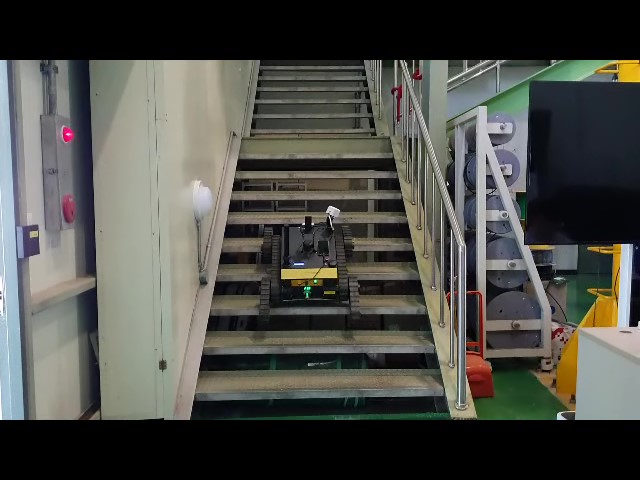
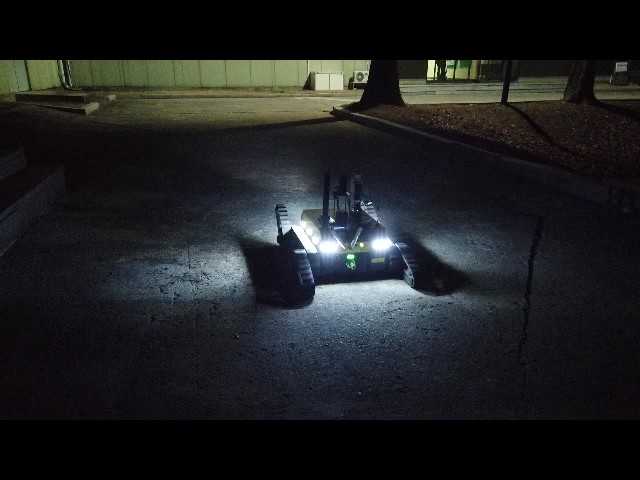
TRAM(Tracked Radiation Area Monitoring Robot for Nuclear Emergency)
- Policy features
In a nuclear emergency situation, a robot can approach the site of a radiation hazard accident instead of a person, obtain information on the situation on the site, and remotely transmit the information to the control room, thereby providing a quick and effective accident response plan.
The nuclear emergency monitoring robot is a track-type moving object that can move across a narrow area, pass through obstacles such as stairs and jaws, and can move a slope of 30 degrees. It is possible to acquire environmental information of the accident site such as radiation dose and temperature, and by attaching a 360 degree camera, a pan tilt zoom camera and an IR camera to acquire image information of the site, it is possible to intuitively grasp the site situation. In the outdoors, it is possible to check the distribution of radioactive contamination by creating a radiation dose map for the moving area in conjunction with GPS.
- Policy details
- Government Organization Information
- Other Policys of
this Government Organization - Related recommended policys
Policy details
The mobile robot for nuclear emergency monitoring has a track-type movement mechanism and is composed of a sensing module consisting of a camera, obstacle sensor, radiation sensor, temperature sensor and GPS. The nuclear emergency monitoring robot has a width of 70 cm and is composed of a variable flipper arm that can adjust the angle, so it is not only easy to traverse and rotate in a narrow passage within 1 m in width, but also can move a slope of 30 degrees. The robot was equipped with four cameras (front, 360 degree, pan tilt zoom, thermal image) to help the robot drive and recognize the situation on the site. A radiation sensor and a temperature sensor were used to collect environmental information on the site to identify dangerous situations, and an obstacle was detected using a lidar sensor, and an outdoor location was identified using GPS. The radiation dose and GPS data obtained while moving the robot were mapped and displayed on a map. As the radiation sensor, a GM tube type sensor capable of measuring 0.1 uSv/h~10 Sv/h was applied, and a GPS with a resolution of several tens of cm was applied. By displaying radiation information on the map, it was possible to understand the distribution of radioactive contamination. Communication with the remote control station can be selected from three methods: wired (LAN), wireless (WIFI mesh), and wireless (4G LTE). The battery is configured with a capacity of 25V/40Ah and can be operated for about 4 hours.
- Policy details
- Government Organization Information
- Other Policys of
this Government Organization - Related recommended policys
Government Organization Information
Address : 111, Daedeok-daero 989beon-gil, Yuseong-gu, Daejeon, 34057 Republic of Korea
Website : http://www.kaeri.re.kr
Since its establishment in 1959, KAERI has been the only research institute in Korea dedicated to nuclear energy. Over the past 60 years, it has accelerated developments in nuclear technology and made significant achievements, including the localization of PHWR and PWR reactors, the design of a Nuclear Steam Supply System(NSSS) - applied to Uljin Units 3 & 4 - and the design and construction of the multi-purpose research reactor HANARO.
As the first research institute of science and technology in Korea and one of the world's best centers of nuclear research, KAERI is building a safe society centered on people and the environment. It will continue to expand into new fields, improving quality of life while attaining higher standards in safety and reliability.
Other Policys of
this Government Organization
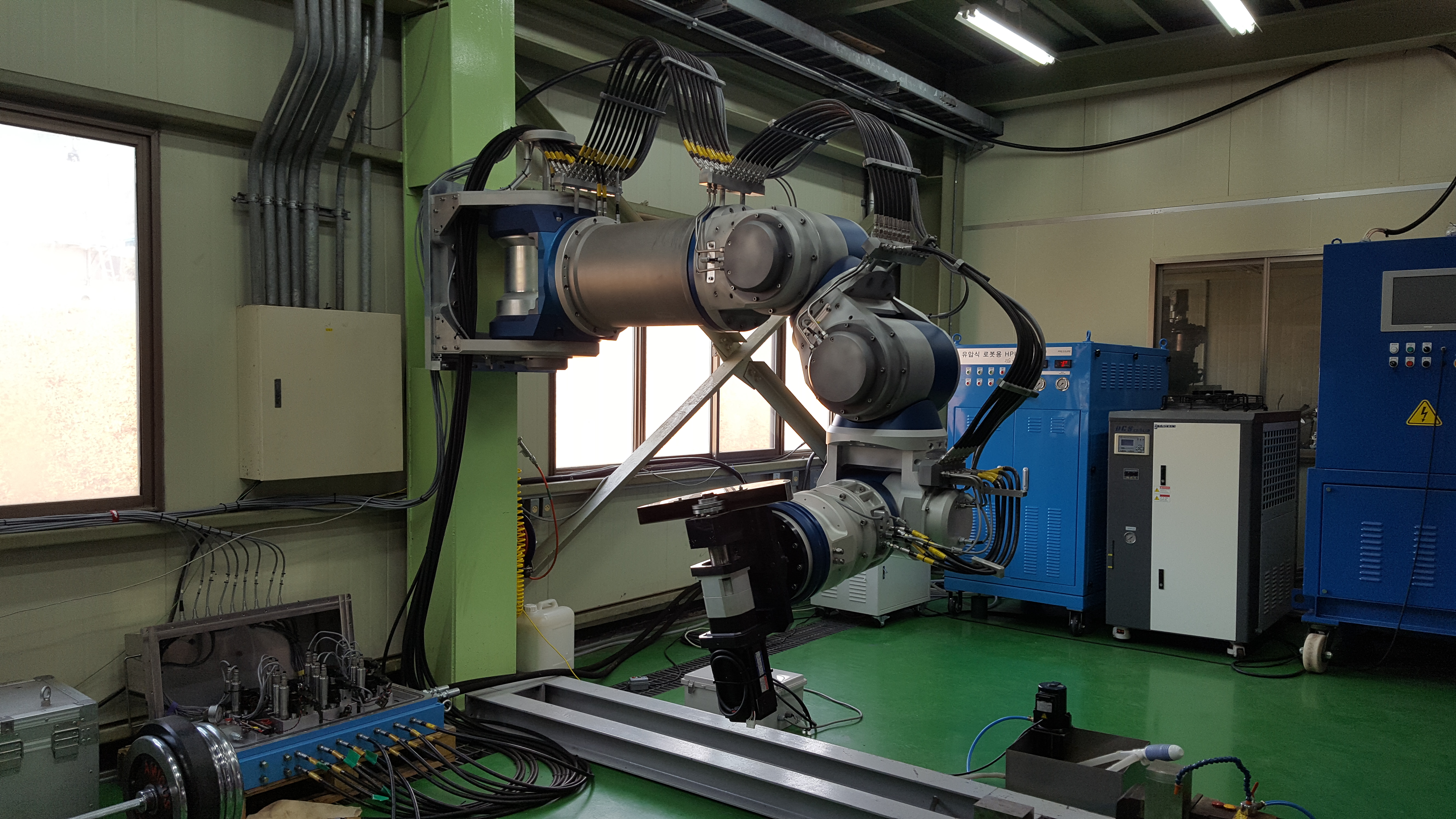




Inquiry for participation (companies) T. +82-31-995-8724 / 8746 / 8092 Inquiry for participation T. +82-31-995-8270 / 8724
COPYRIGHT (C) K-SAFETY EXPO 2020. ALL RIGHTS RESERVED.
